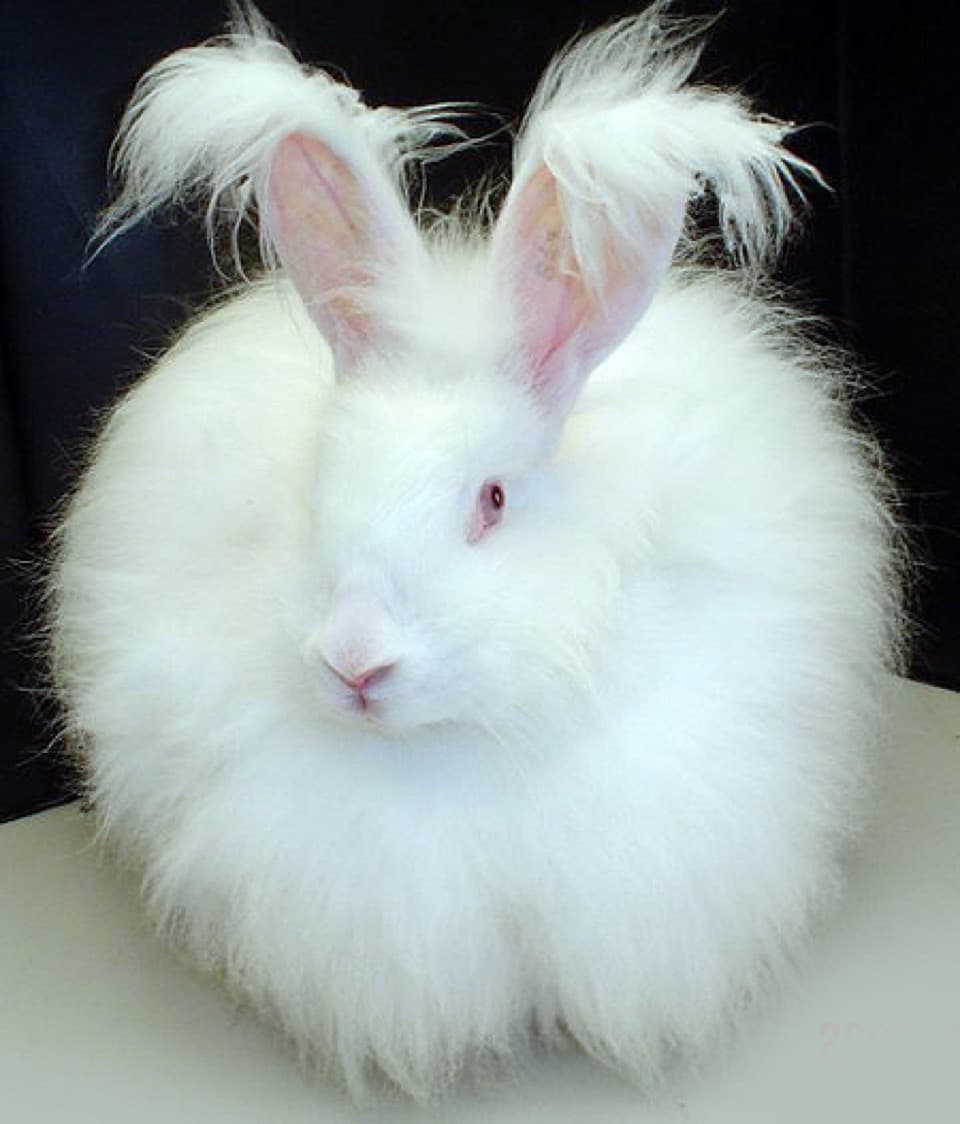
English Angora
Also known as Angora rabbit
- Adult size
- About 2–3.5 kg
- Lifespan
- 7–12 years
- Origin
- England (Angora type from the Ankara region of Turkey)
- Company
- Keep in a neutered pair or group
- Calm
- Gentle
- Fluffy
- High-maintenance
About the English Angora
The English Angora is the smallest and woolliest of the Angora breeds, with long, fine wool covering its body, face and ears, often making it look like a ball of fluff. Angora rabbits are associated with the area around Ankara in Turkey, and the English variety was developed in Britain.
Angora wool is valued for spinning, and the coat grows continuously. That makes the English Angora one of the most demanding rabbits to keep in terms of grooming, and it is best suited to owners prepared for frequent, careful coat care.
Temperament
English Angoras are often calm and gentle, and many become used to regular handling because of their grooming needs. They can be playful once comfortable. Individual personalities vary, and patience during grooming helps prevent them from becoming wary of handling.
Housing
A clean, dry and cool environment is essential, with plenty of space to exercise. Bedding that sticks to wool, such as straw or wood shavings, can create tangles, so many owners prefer a clean, smooth surface with hay offered in a rack or tray. These rabbits overheat easily, so provide shade, ventilation and a cool place to lie in warm weather.
Diet
Generous amounts of hay help move swallowed wool through the gut and should always be available. Wool production uses a lot of protein, so ask a vet familiar with rabbits about the right pellet portion for your Angora. Provide leafy greens daily and fresh water at all times.
Exercise & enrichment
Daily exercise is important for gut health as well as wellbeing. Toys, tunnels and foraging opportunities keep them engaged, although tight spaces may snag wool. Keep grooming sessions short and positive, with rewards, so handling remains a pleasant experience.
Grooming
Expect to groom several times a week, often daily, to prevent mats; many owners also clip or pluck the coat at intervals when it is ready to shed. Wool on the face and feet needs gentle attention, and nails and teeth should be checked regularly.
Health
Wool swallowed during grooming can contribute to gut stasis, which is a serious emergency in rabbits. Matted wool can trap moisture and faeces, leading to skin sores and flystrike. Heatstroke is a real risk in a full coat, and dental disease should be monitored as with all rabbits.
Prone to
- Gut stasis linked to swallowed wool
- Matting and skin sores
- Flystrike
- Heatstroke
- Dental disease
Call a vet if you notice
- Small, few or no droppings, or not eatingEmergency
- Maggots or a soiled coat around the rearEmergency
- Heavy breathing, weakness or collapse in warm weatherEmergency
- Sore or red skin beneath matted wool
- Weight loss hidden under the coat
A vet with experience of exotic pets is best placed to help. Find one before you need them.
Common questions
How often do you groom an English Angora rabbit?
Most need grooming several times a week, and often daily, to stop the wool from matting. Many owners also harvest the coat by clipping or gentle plucking when it loosens.
Is an English Angora a good first rabbit?
It is usually not recommended as a first rabbit because of the time and skill needed for coat care. Experienced owners who enjoy grooming are a better fit.
Can English Angoras see through their fur?
Wool can grow over the face and eyes, so owners often trim it carefully around the eyes to keep vision clear. Ask an experienced groomer or vet to show you how to do this safely.
Written by the Petopedia editorial team to our editorial standards. General guidance, not veterinary advice.