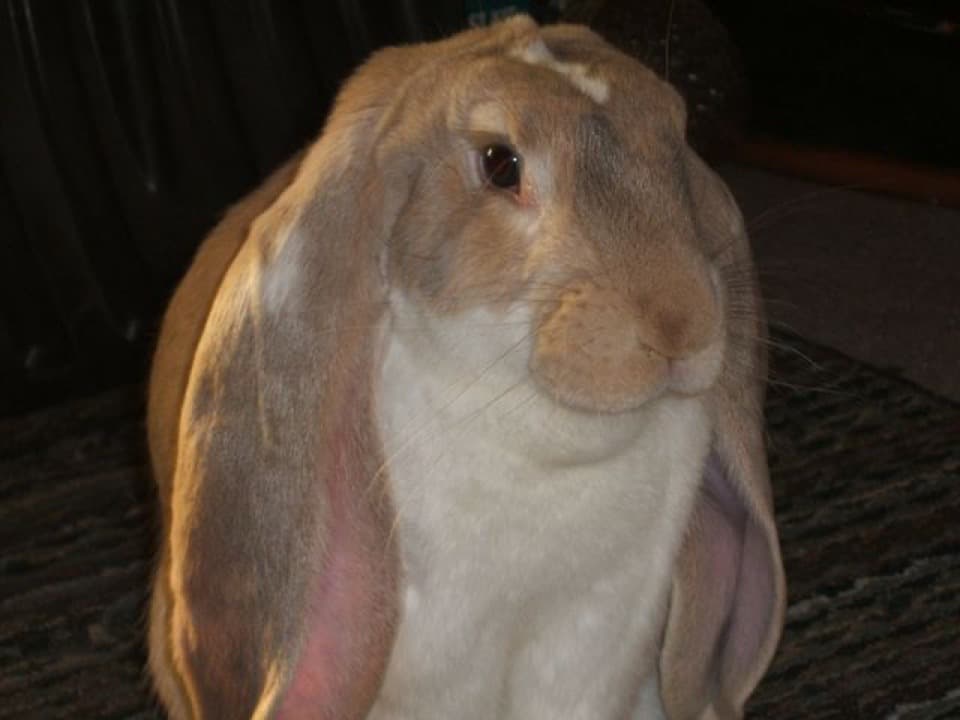
English Lop
- Adult size
- About 4–5.5 kg; ears often over 55 cm from tip to tip
- Lifespan
- 5–8 years
- Origin
- England
- Company
- Keep in a neutered pair or group
- Laid-back
- Affectionate
- Gentle
- Long-eared
About the English Lop
The English Lop is known for having the longest ears of any rabbit breed, often trailing along the ground. It is one of the oldest fancy breeds, developed in England in the 19th century, and the ears were deliberately bred for length over many generations.
Those remarkable ears bring practical care needs: they are easily injured, can be stepped on and are prone to infection. English Lops are typically gentle, slightly lanky rabbits suited to owners who can offer careful, attentive care.
Temperament
English Lops are often described as laid-back, affectionate and somewhat dog-like in their interest in people. They are usually less athletic than smaller breeds, preferring to potter and explore. Most enjoy calm company and gentle attention.
Housing
A spacious, clean environment with smooth, soft flooring helps protect their ears from injury. Avoid wire, rough edges and clutter that the ears could catch on. They are sensitive to cold and to heat, as the ears are thin and lose or gain heat quickly, so a stable indoor setting often suits them best.
Diet
As with all rabbits, hay should be freely available and form most of the diet, with leafy greens daily and limited pellets. Use shallow, wide bowls positioned so the ears do not drag through food and water. Keep sugary treats to an occasional minimum.
Exercise & enrichment
They enjoy exploring floor-level spaces, sniffing out scattered herbs and investigating tunnels wide enough not to rub their ears. Gentle, patient handling suits their nature. Always support the ears when lifting, and never lift a rabbit by its ears.
Grooming
The coat needs weekly brushing. Check the ears daily for cuts, scabs or dirt, and keep nails trimmed short, as long hind claws can scratch the ears when the rabbit grooms or scratches.
Health
Ear injuries and ear canal infections are the most common breed-related problems, and infections can spread to the middle ear and affect balance. Dental disease, as in other lops, should be monitored. Their thin ears are also vulnerable to frostbite in cold weather and can be a source of heat stress in hot conditions.
Prone to
- Ear injuries
- Ear canal infections
- Dental disease
- Frostbite of the ears
- Heat stress
Call a vet if you notice
- No eating or droppingsEmergency
- Bleeding or infected wounds on the ears
- Head tilt or loss of balance
- Ears that are hot, swollen or discoloured
- Discharge or smell from the ear canal
A vet with experience of exotic pets is best placed to help. Find one before you need them.
Common questions
How long are English Lop ears?
Measured from tip to tip across the head, they commonly exceed 55 cm, and show rabbits can be considerably longer. They are the longest ears of any rabbit breed.
Do English Lops trip over their ears?
Young rabbits sometimes step on their ears while they grow into them. Smooth, clutter-free floors and short nails help prevent injuries.
Can English Lops live outside?
It is possible with excellent shelter, but their large, thin ears make them vulnerable to cold, heat and injury. Many owners find indoor housing easier to manage safely.
Written by the Petopedia editorial team to our editorial standards. General guidance, not veterinary advice.