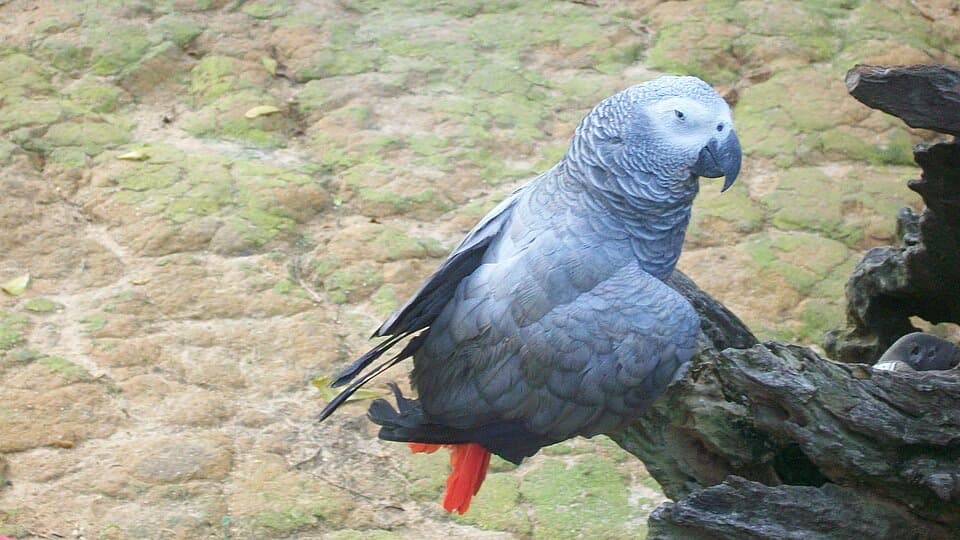
African Grey Parrot
Also known as Grey parrot, Congo African grey, Timneh grey
- Adult size
- 30–33 cm long, 400–550 g (Timneh smaller)
- Lifespan
- 40–60 years
- Origin
- West and Central Africa
- Company
- Needs several hours of interaction every day; strongly bonded to its people
- Intelligent
- Sensitive
- Observant
- Vocal
About the African Grey Parrot
African greys are medium-sized grey parrots with bright red tails (Congo) or maroon tails (Timneh), native to the rainforests of West and Central Africa. They are famous for their intelligence and their remarkably clear mimicry of speech and household sounds.
Wild populations have declined sharply due to trapping and habitat loss, and international trade in wild-caught birds is now heavily restricted. Anyone considering a grey should choose a captive-bred bird and be ready for a commitment that can last 40 to 60 years.
Greys are sensitive, demanding companions that need hours of interaction and mental challenge every day. They are not a good choice for a busy household that is out most of the day.
Temperament
Greys are thoughtful, observant birds that often take time to accept changes or new people. They form strong bonds and can become one-person birds if not socialised widely. Boredom, stress or lack of attention commonly leads to feather plucking. They are generally not as cuddly as cockatoos but enjoy being close to their family.
Cage & housing
A grey needs a large, sturdy cage, at least around 90 cm wide, 60 cm deep and 120 cm tall, with bar spacing around 2–2.5 cm. Place it in a busy family room but against a wall so the bird feels secure. Aim for at least three to four hours a day out of the cage, with a play stand and supervised exploration. Keep the home free of non-stick cookware fumes, aerosols, scented candles and cigarette smoke, which can be fatal to parrots.
Diet
Greys are prone to calcium and vitamin A deficiency, particularly on seed-heavy diets. Feed a high-quality pellet as the base with a wide range of fresh vegetables, some fruit and limited nuts and seeds as treats. Good daylight or a suitable avian UV lamp helps with calcium metabolism. Never offer avocado, chocolate, caffeine or alcohol.
Company & enrichment
Daily foraging, puzzle toys, shredding materials and training are essential. Greys learn quickly with positive reinforcement and enjoy learning names of objects, colours and tricks. Rotate toys frequently and vary routines to prevent boredom. Even an hour of focused one-to-one time each day makes a large difference to their wellbeing.
Nails, beak & bathing
Greys produce powder down, so regular showers or misting keep feathers healthy and reduce dust. Nails can be kept blunt with textured perches; an avian vet can trim them if needed. Never trim the beak at home.
Health
Feather plucking is very common and can have medical or behavioural causes, so it always needs a vet check first. Greys are prone to low blood calcium, which can cause seizures, as well as respiratory fungal infections and psittacine beak and feather disease. Annual avian vet health checks are recommended. Find an experienced avian vet before you bring a grey home.
Prone to
- Feather plucking
- Low blood calcium (hypocalcaemia)
- Vitamin A deficiency
- Aspergillosis
- Psittacine beak and feather disease
- Heart and artery disease in older birds
Call a vet if you notice
- Seizures, falling off the perch or wobblinessEmergency
- Laboured breathing or tail bobbingEmergency
- Sudden exposure to non-stick pan fumes or smokeEmergency
- New or worsening feather plucking
- Change in voice, appetite or droppings
A vet with experience of exotic pets is best placed to help. Find one before you need them.
Common questions
How long do African greys live?
With good care, many live 40 to 60 years. Owners should plan for the bird to outlive them and make arrangements for its future care.
Why is my African grey plucking its feathers?
Plucking can be caused by illness, poor diet, stress, boredom or lack of sleep. An avian vet should rule out medical causes first, then diet, enrichment and routine can be reviewed.
Are African greys good talkers?
They are among the best mimics of human speech, though not every bird talks. Speech usually develops after the first year.
Are African greys good for first-time owners?
Generally not. Their sensitivity, long life and need for constant engagement make them better suited to experienced parrot keepers.
Written by the Petopedia editorial team to our editorial standards. General guidance, not veterinary advice.