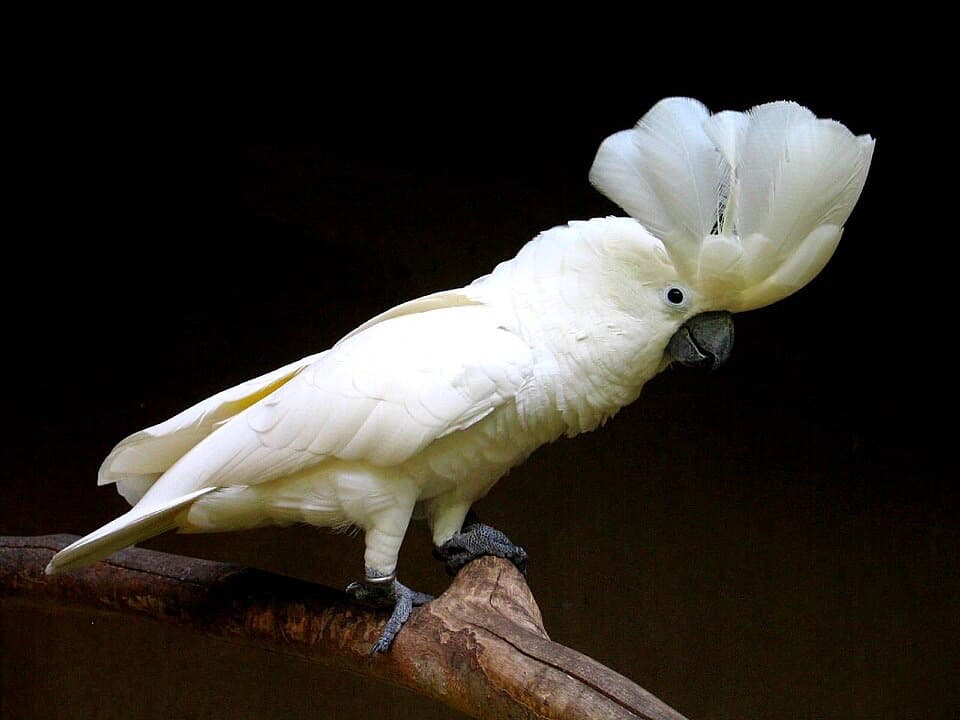
Umbrella Cockatoo
Also known as White cockatoo
- Adult size
- 45–50 cm long, 400–600 g
- Lifespan
- 40–70 years
- Origin
- Indonesia (northern Moluccas)
- Company
- Extremely demanding; needs company for most of the day
- Affectionate
- Clingy
- Loud
- Intelligent
About the Umbrella Cockatoo
The umbrella cockatoo is a large white cockatoo named for its broad crest, which opens like an umbrella when the bird is excited. It is native to a few islands in Indonesia and is listed as endangered in the wild because of trapping and habitat loss.
Umbrella cockatoos have a reputation as very cuddly birds, but this affection comes with intense needs. Many end up rehomed because owners underestimate their noise, clinginess and destructive power.
Temperament
These cockatoos are extremely affectionate and often demand constant physical contact. Hand-reared birds can become overly dependent on their owners and scream when left alone. Hormonal behaviour and frustration can lead to biting, screaming and feather plucking or self-injury. They are highly intelligent and need a structured routine that encourages independent play.
Cage & housing
A large, sturdy cage of at least around 1.2 m wide, 90 cm deep and 1.5 m tall is needed, with secure locks as cockatoos are skilled escape artists. Provide a play stand and many hours out of the cage daily. Cockatoos shed powder down, so good ventilation or an air purifier helps. Protect them from non-stick cookware fumes, aerosols, candles and smoke.
Diet
Feed a pellet base with lots of vegetables and some fruit, keeping fatty seeds and nuts as limited treats; cockatoos are prone to obesity and fatty tumours. Offer food in foraging toys to lengthen eating time. Avoid avocado, chocolate, caffeine and alcohol. Provide fresh water daily.
Company & enrichment
Umbrella cockatoos need constant opportunities to chew, shred, forage and solve puzzles. Teaching them to play independently is as important as cuddle time. Avoid long stroking sessions on the back or under the wings, which can trigger hormonal behaviour. Training and a predictable day help reduce screaming.
Nails, beak & bathing
Regular showers help manage their heavy powder down. Nails and beak usually wear naturally with chewing, but an avian vet can trim nails if needed. Wipe surfaces near the cage often to control dust.
Health
Feather plucking and self-mutilation are serious problems in this species and need both medical and behavioural investigation. Cockatoos are also prone to psittacine beak and feather disease, obesity, fatty tumours and cloacal prolapse, which is linked to hormonal behaviour. Annual avian vet checks are recommended. Any wounds from self-biting need prompt treatment.
Prone to
- Feather plucking and self-mutilation
- Psittacine beak and feather disease
- Obesity and fatty tumours
- Cloacal prolapse
- Hormonal behaviour problems
Call a vet if you notice
- Tissue protruding from the ventEmergency
- Bleeding from self-inflicted woundsEmergency
- Breathing difficultyEmergency
- Feather loss, abnormal feathers or beak changes
- Persistent screaming with change in behaviour
A vet with experience of exotic pets is best placed to help. Find one before you need them.
Common questions
Why do so many umbrella cockatoos get rehomed?
Their need for attention, very loud screaming and destructive chewing often overwhelm owners. Prospective owners should spend time with an adult cockatoo before committing.
Are umbrella cockatoos cuddly?
Yes, but excessive cuddling can encourage hormonal behaviour and dependence. Balancing affection with independent play is healthier.
Why does my cockatoo pluck its feathers?
Causes can be medical, nutritional or behavioural. An avian vet should examine the bird before behavioural changes are made.
Written by the Petopedia editorial team to our editorial standards. General guidance, not veterinary advice.