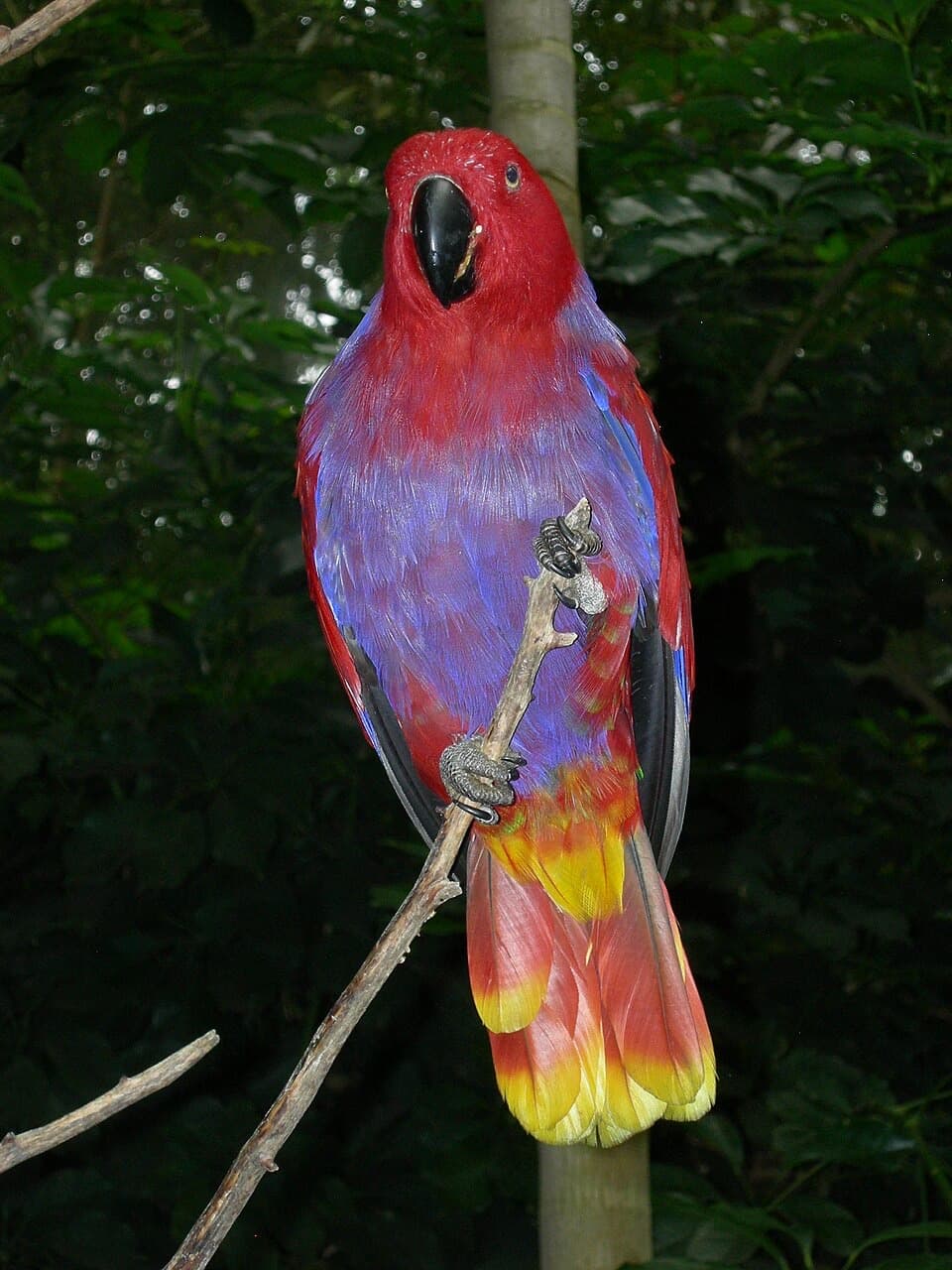
Eclectus Parrot
Also known as Eclectus, Moluccan eclectus, Red-sided eclectus, Solomon Island eclectus
- Adult size
- 35–42 cm long, 375–550 g (varies by subspecies)
- Lifespan
- 30–50 years
- Origin
- New Guinea, the Solomon Islands, Moluccas and far northern Australia
- Company
- Calm but needs daily interaction and a stable routine
- Calm
- Gentle
- Observant
- Striking
About the Eclectus Parrot
Eclectus parrots show one of the most dramatic colour differences between sexes of any bird: males are bright emerald green with an orange beak, while females are deep red with purple or blue and a black beak. Early naturalists thought they were two separate species.
Several subspecies and closely related forms are kept, varying in size and colour detail. Their feathers have a fine, hair-like texture unlike most parrots.
Eclectus have a long digestive tract adapted to fibrous fruit, flowers and plant material, and their specific dietary needs make them better suited to keepers willing to prepare a lot of fresh food.
Temperament
Males are usually gentle, calm and easygoing, while females tend to be more assertive, territorial and occasionally bossy; in the wild females guard nest hollows for long periods while males feed them. Eclectus are generally thoughtful birds that watch before acting rather than demanding constant cuddles. Many become good talkers with a clear voice. Their calls are loud and honking, but they are usually quieter than cockatoos or macaws day to day.
Cage & housing
Provide a cage of at least around 90 cm wide, 60 cm deep and 120 cm tall, with bar spacing of about 2–2.5 cm and a play stand outside it. Their wet, fresh-food diet makes a mess, so wipe-clean flooring and daily bowl washing are needed. Allow several hours out of the cage daily. Regular misting suits their rainforest origins, and like all parrots they must be protected from cooking fumes, scented products and smoke.
Diet
Eclectus do best on a high-fibre diet with a large proportion of fresh vegetables, fruit, sprouted seeds and cooked pulses and grains, rather than a dry, mostly pellet diet. They have a high requirement for vitamin A, so orange and dark green foods such as sweet potato, squash, carrot, red pepper and leafy greens should feature daily. Many avian vets believe eclectus are sensitive to heavily fortified foods and added synthetic vitamins or colours, so ask a vet before using supplements or highly fortified pellets. Change diet gradually and avoid avocado and chocolate.
Company & enrichment
Foraging is an important outlet: wrap vegetables in paper, skewer them on kebabs or hide them in boxes. Eclectus enjoy chewing soft wood and learning tricks with positive reinforcement. They respond well to a calm, predictable household. Gentle daily interaction keeps them tame without encouraging hormonal behaviour.
Nails, beak & bathing
Their hair-like feathers look their best with frequent bathing or misting. Ask an avian vet to clip the nails if they grow long. Healthy eclectus plumage is glossy; dull or stress-barred feathers can point to dietary problems.
Health
Toe tapping and wing flipping, where a bird twitches its feet or flicks its wings repeatedly, are seen in eclectus and are often linked by vets to diet, including possible over-supplementation. Vitamin A deficiency can cause respiratory infections and mouth problems. Feather plucking and egg binding in hens also occur. Find an avian vet familiar with eclectus, as their needs differ from other parrots.
Prone to
- Toe tapping and wing flipping
- Vitamin A deficiency
- Sensitivity to over-fortified foods
- Feather plucking
- Egg binding
Call a vet if you notice
- Laboured breathingEmergency
- Hen straining to layEmergency
- Toe tapping or wing flipping
- White patches in the mouth or nasal discharge
- Feather plucking or dull, barred feathers
A vet with experience of exotic pets is best placed to help. Find one before you need them.
Common questions
Why are male and female eclectus different colours?
Eclectus show extreme differences between the sexes: males are green and females red with purple or blue. The reasons are still studied, but it is natural.
What should eclectus parrots eat?
A high-fibre, fresh diet rich in vegetables, fruit, sprouts and pulses, with plenty of vitamin A from orange and dark green foods. Ask an avian vet before adding supplements, as eclectus may react to excess vitamins.
What is toe tapping in eclectus?
It is a repeated twitching or clenching of the toes, sometimes with wing flicking. Vets often link it to diet, so it is worth a check-up and a diet review.
Are female eclectus more aggressive?
Females are often more dominant and territorial, especially in breeding season, while males are typically gentler. Individuals vary a lot.
Written by the Petopedia editorial team to our editorial standards. General guidance, not veterinary advice.