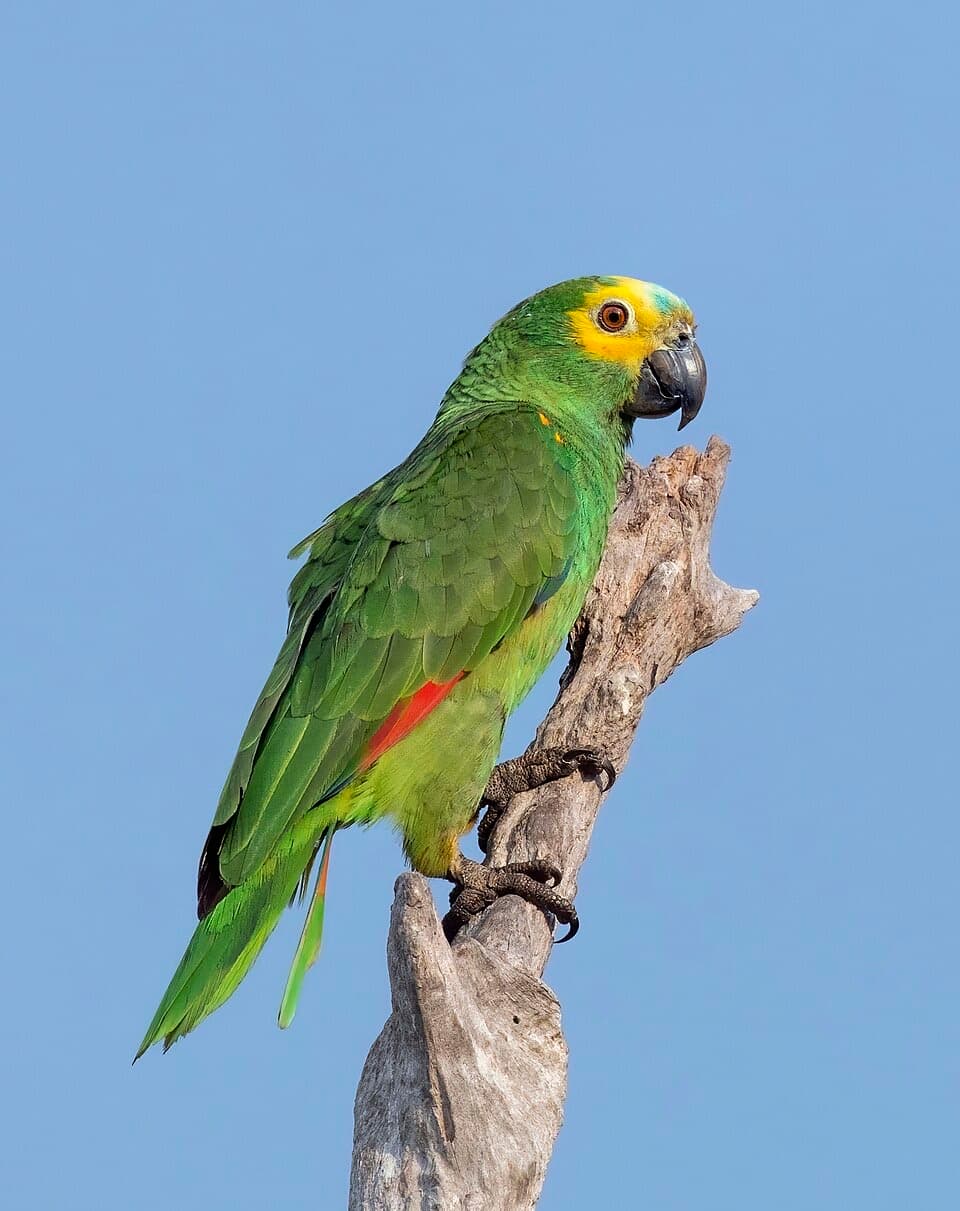
Blue-fronted Amazon
Also known as Turquoise-fronted amazon, Blue-fronted parrot
- Adult size
- 35–38 cm long, 350–500 g
- Lifespan
- 40–60 years
- Origin
- South America (Brazil, Bolivia, Paraguay, Argentina)
- Company
- Outgoing; needs hours of daily interaction and a predictable routine
- Outgoing
- Playful
- Loud
- Talkative
About the Blue-fronted Amazon
The blue-fronted Amazon is a stocky green parrot with a turquoise-blue forehead and yellow face, native to woodland and savannah in central South America. It is one of the most commonly kept Amazon parrots.
Amazons are loud, playful and outgoing, with a reputation as clowns and good talkers. They also live for many decades and can become hormonal and nippy during the breeding season.
Temperament
Blue-fronts are confident, extroverted birds that love attention, singing and showing off. They can be excellent talkers with clear voices. During spring, mature birds, especially males, can become hormonal and bite, often signalled by pinned pupils, fanned tail and puffed feathers. They are loud, particularly at dawn and dusk.
Cage & housing
Provide a strong cage of at least around 90 cm wide, 60 cm deep and 120 cm tall, with a play top or separate stand. Amazons love climbing and need daily out-of-cage time of several hours. Keep them away from cooking fumes, non-stick cookware heated at high temperatures, aerosols and smoke. Regular access to safe natural daylight or an avian UV lamp is beneficial.
Diet
Amazons gain weight easily and are prone to fatty liver, so sunflower-heavy seed mixes should be avoided. A pellet base with plenty of fresh vegetables, some fruit and few fatty nuts or seeds works well. Offer food in ways that encourage foraging. Never feed avocado, chocolate, caffeine or alcohol.
Company & enrichment
Exercise is vital to prevent obesity; encourage climbing, flapping and, if safe, flying. Amazons enjoy bathing, singing, chewing and learning tricks. Training sessions help manage hormonal behaviour by giving clear routines. Avoid over-petting the back and under the wings, which can increase hormonal behaviour.
Nails, beak & bathing
Most Amazons love showers and heavy misting. Nails may need occasional trimming. Keep the cage and perches clean as they can be messy eaters.
Health
Obesity, fatty liver and atherosclerosis are common in Amazons on rich diets. Vitamin A deficiency can lead to respiratory infections and sores in the mouth. Respiratory disease and aspergillosis are also seen. Annual avian vet checks help catch problems early.
Prone to
- Obesity and fatty liver
- Vitamin A deficiency
- Atherosclerosis
- Respiratory infections
- Aspergillosis
- Hormonal aggression
Call a vet if you notice
- Laboured breathing or tail bobbingEmergency
- Sitting fluffed on the cage floorEmergency
- White plaques in the mouth or swelling around the eyes
- Nasal discharge or sneezing
- Weight gain or reduced activity
A vet with experience of exotic pets is best placed to help. Find one before you need them.
Common questions
Are blue-fronted Amazons loud?
Yes. They have powerful voices and usually call loudly at dawn and dusk. They are not suited to flats with thin walls or noise-sensitive neighbours.
Why has my Amazon become aggressive in spring?
Mature Amazons often become hormonal in the breeding season. Keeping a consistent routine, ensuring enough sleep and avoiding stroking the back can help; persistent aggression is worth discussing with an avian vet or behaviourist.
Do blue-fronted Amazons talk?
Many are good talkers and singers, though ability varies between individuals.
Written by the Petopedia editorial team to our editorial standards. General guidance, not veterinary advice.