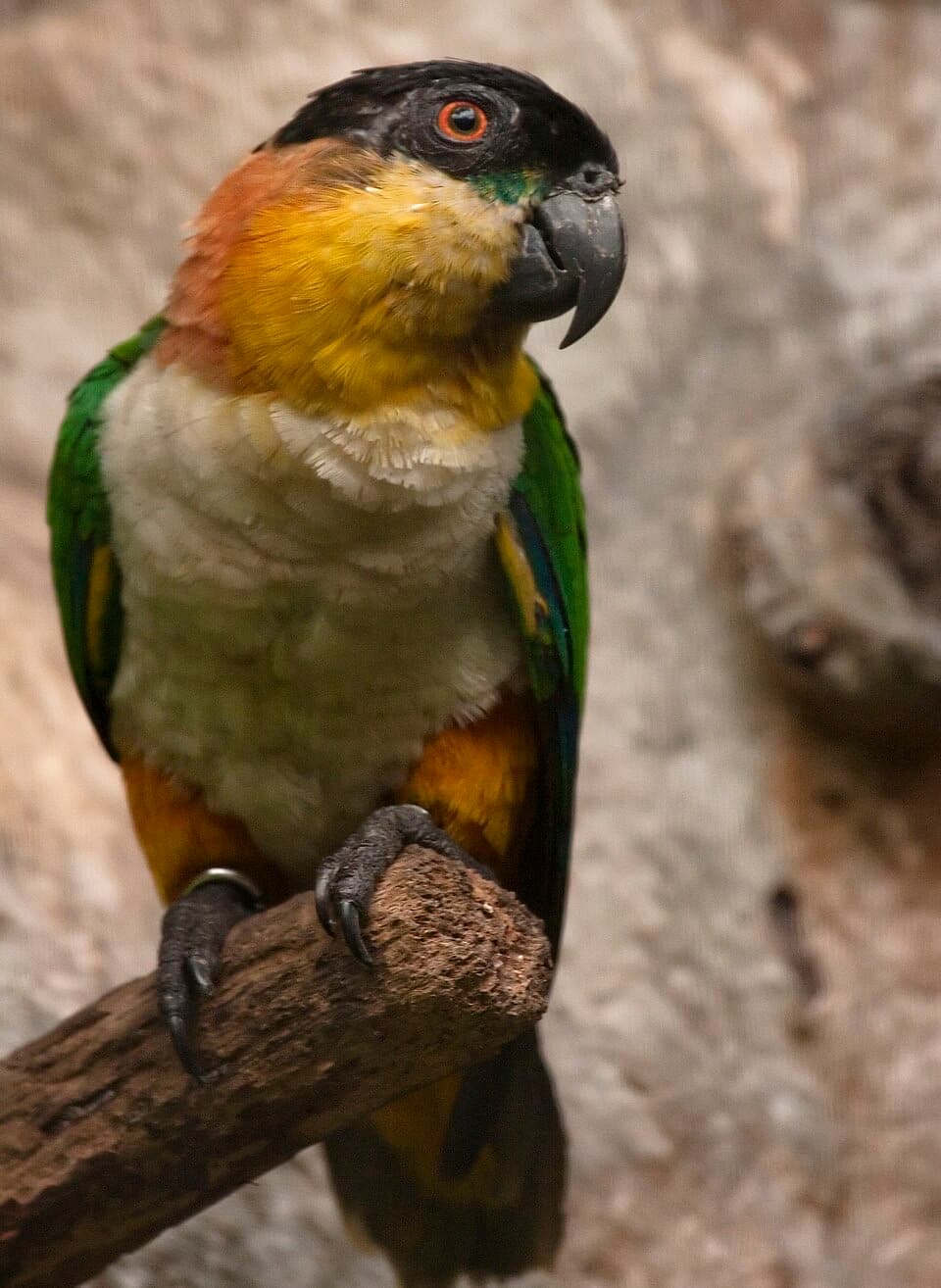
Black-headed Caique
Also known as Black-headed parrot, Caique
- Adult size
- about 23 cm long, 150–170 g
- Lifespan
- 25–40 years
- Origin
- Northern South America, north of the Amazon river
- Company
- Very active; needs daily play and should not be housed with other species
- Clownish
- Energetic
- Fearless
- Nippy
About the Black-headed Caique
The black-headed caique is a stocky, short-tailed parrot with a black cap, orange-yellow cheeks and throat, green wings and a creamy white belly, native to forests north of the Amazon. Its relative, the white-bellied caique, lives south of the river.
Caiques are famous for their clownish energy. They hop across floors with both feet together, roll onto their backs, wrestle toys and each other, and 'surf' by sliding along on their backs.
That boundless energy comes with a strong beak and a stubborn streak, so caiques need owners who can match their enthusiasm and train them consistently.
Temperament
Caiques are bold, fearless and rarely still, treating most objects and people as playthings. They can be affectionate but often play rough and may nip when excited, and they are known for being aggressive towards other bird species, sometimes attacking feet. Rather than talking much, they produce whistles, squeaks and a high-pitched shriek that is loud but usually less sustained than a conure's. Consistent positive training is essential to keep play from becoming biting.
Cage & housing
Provide a cage of at least around 75 cm wide, 60 cm deep and 90 cm tall, with bar spacing of about 2 cm. Caiques play on the cage floor as much as on perches, so a clean floor area and foot toys are worth including. Their energy means they need more space and several hours of time outside the cage each day. Keep the home free from smoke and fumes, as with all parrots.
Diet
Feed a pellet base with plenty of vegetables and fruit; caiques eat a lot of fruit and flowers in the wild and usually enjoy fresh food. Seeds and nuts can be given in moderation as rewards. Change water daily, and often more, as caiques love to bathe and dunk food in it. Never offer avocado or chocolate.
Company & enrichment
Caiques hop, roll and wrestle, so offer foot toys, balls, swings and soft toys to tackle, alongside foraging challenges. Floor play sessions with supervision let them hop and surf safely. Trick training channels their energy and reduces nipping. A pair of caiques often entertains each other with wrestling matches.
Nails, beak & bathing
Caiques adore water and will dive into their bowls or under a shower. Overgrown claws are best trimmed at the vet's. Wipe down the cage regularly, as they scatter fruit.
Health
Caiques can catch psittacosis and polyomavirus and are prone to respiratory infections. Injuries from fights with other birds are common if housed with or allowed near other species, and the caique can be either the attacker or the victim. Obesity can develop if they are confined too much. An annual wellness visit to a bird vet is a good idea.
Prone to
- Psittacosis
- Polyomavirus
- Respiratory infections
- Injuries from other birds
- Obesity
Call a vet if you notice
- Breathing difficultyEmergency
- Bleeding wounds or toe injuriesEmergency
- Unusual stillness or lethargy in a normally busy bird
- Change in droppings
- Loss of appetite
A vet with experience of exotic pets is best placed to help. Find one before you need them.
Common questions
Why does my caique hop and roll on its back?
Hopping and back-surfing are normal caique play behaviours. They are a sign of a happy, energetic bird.
Are caiques good pets for beginners?
They are great fun but demanding. Their energy, nipping and need for training make them better suited to owners with some parrot experience.
Do caiques talk?
A few learn some words, but most prefer whistles and squeaks.
Can caiques live with other parrots?
It is not recommended. Caiques can be aggressive towards other species and may cause or receive serious injuries.
Written by the Petopedia editorial team to our editorial standards. General guidance, not veterinary advice.