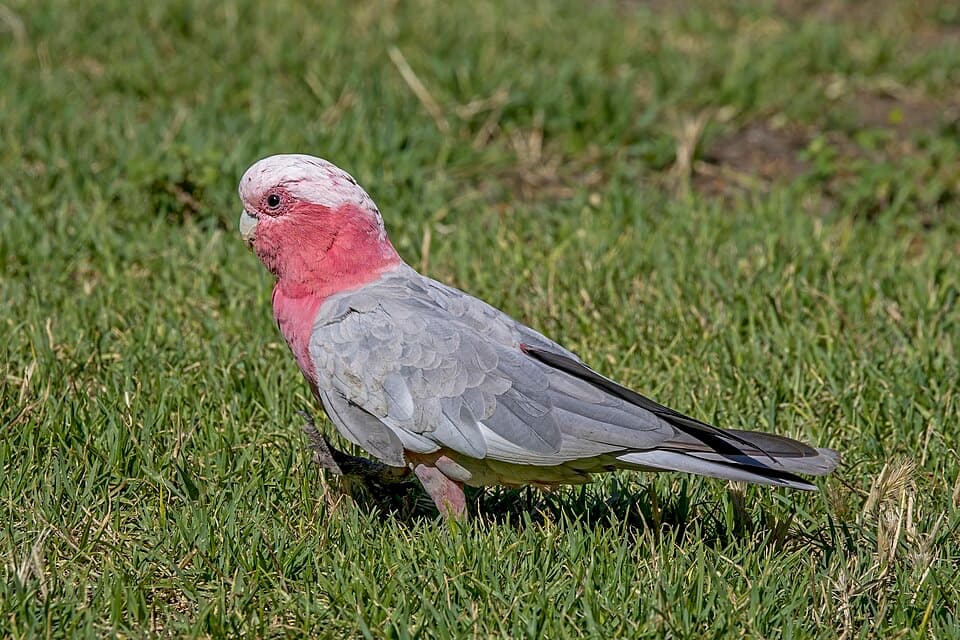
Galah
Also known as Rose-breasted cockatoo, Pink and grey cockatoo
- Adult size
- 35–36 cm long, 270–350 g
- Lifespan
- 30–50 years
- Origin
- Australia
- Company
- Affectionate and playful; needs daily interaction and play
- Clownish
- Affectionate
- Energetic
- Noisy
About the Galah
The galah is a pink and grey cockatoo found across most of Australia, where it is one of the most common and familiar birds. It feeds in noisy flocks on the ground, eating seeds, roots and grasses.
In captivity, galahs are playful, affectionate birds but share the cockatoo tendency to be loud, demanding and prone to weight gain. Outside Australia they are less common and can be expensive to obtain from responsible breeders.
Temperament
Galahs are clownish, cheeky birds that love to hang upside down, roll on their backs and play rough. They bond closely with their owners and may talk a little. They are generally slightly less clingy than larger white cockatoos but can still scream and pluck if bored. Hormonal behaviour can bring nipping.
Cage & housing
A cage of at least around 90 cm wide, 60 cm deep and 120 cm tall suits a galah, with plenty of out-of-cage time. Provide a ground-level foraging tray, since galahs naturally feed on the ground. Keep them away from draughts and household fumes such as non-stick pans, aerosols and smoke. An aviary with a sheltered area is ideal where climate allows.
Diet
Galahs are very prone to obesity and fatty tumours, so high-fat seeds like sunflower should be kept to a minimum. A low-fat pellet with plenty of vegetables, leafy greens and grasses suits them. Sprouted seeds make a good, lighter treat. Avocado, chocolate, coffee and alcohol are toxic and must never be offered.
Company & enrichment
Ground foraging trays filled with shredded paper and hidden treats are especially suited to galahs. They enjoy chewing, swinging and learning tricks. Daily flight or vigorous flapping helps control weight. Provide independent play to prevent overdependence.
Nails, beak & bathing
Galahs produce powder down and enjoy rain-style showers. Overlong claws can be blunted by an avian vet. Clean food dishes daily.
Health
Obesity, fatty liver and lipomas (fatty lumps) are common in pet galahs, especially on seed diets. Psittacine beak and feather disease affects galahs in the wild and in captivity. Feather plucking can develop from boredom. Regular weighing helps spot weight gain early.
Prone to
- Obesity and fatty liver
- Lipomas
- Psittacine beak and feather disease
- Feather plucking
Call a vet if you notice
- Breathing difficultyEmergency
- Fluffed and unwilling to moveEmergency
- New lumps under the skin
- Abnormal or lost feathers
- Weight gain despite diet changes
A vet with experience of exotic pets is best placed to help. Find one before you need them.
Common questions
Do galahs make good pets?
They can be delightful for owners who can offer plenty of time and a low-fat diet. They are loud and need lots of attention.
Can galahs talk?
Some learn a few words and phrases, though they are not as reliable talkers as greys or Amazons.
Why is my galah getting fat?
Galahs are naturally prone to weight gain, especially on seed diets. Switching to a low-fat pellet diet with vegetables and encouraging exercise helps, with guidance from an avian vet.
Written by the Petopedia editorial team to our editorial standards. General guidance, not veterinary advice.