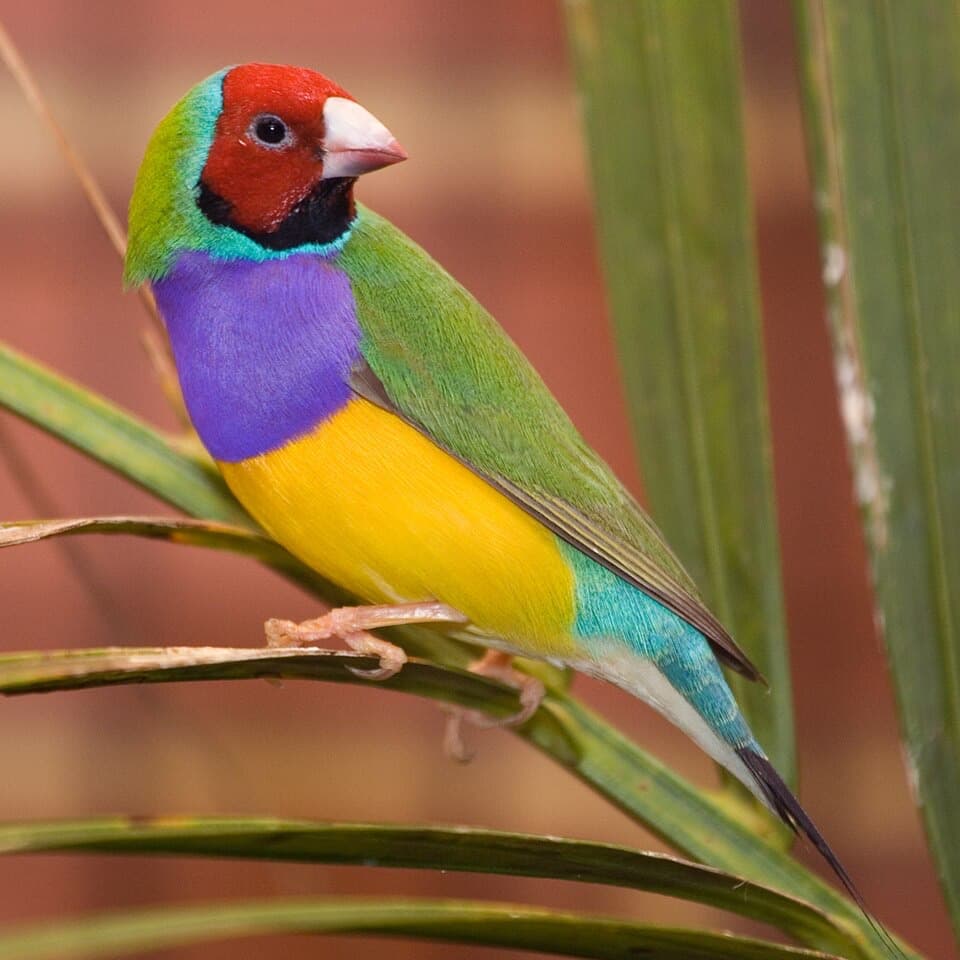
Gouldian Finch
Also known as Lady Gouldian finch, Rainbow finch
- Adult size
- 12–14 cm long, 14–20 g
- Lifespan
- 5–8 years
- Origin
- Northern Australia
- Company
- Pairs or small peaceful groups; easily stressed
- Colourful
- Shy
- Peaceful
- Delicate
About the Gouldian Finch
The Gouldian finch is one of the most colourful birds in the world, with a purple chest, yellow belly, green back and red, black or yellow head. It is native to tropical northern Australia, where wild numbers have declined.
Gouldians are more delicate than zebra finches and need warmth, calm surroundings and careful management of moulting and breeding.
Temperament
Gouldians are peaceful, shy birds that generally get along with other gentle finches. They are easily stressed by noise, sudden changes and overcrowding. They are not handling birds. Males have a quiet, almost whispering song.
Cage & housing
Provide a long flight cage or aviary with plenty of space, at least around 90 cm for a pair. They need warmth, with temperatures generally kept above about 18 °C, and protection from draughts. Good natural light or full-spectrum lighting is beneficial. Keep them in a calm area of the home.
Diet
Feed a finch seed mix with greens, sprouted seeds and egg food, especially during moult and breeding. They need a reliable source of calcium and minerals. Fresh water daily. Sudden diet changes should be avoided.
Company & enrichment
Flight space and natural branches are the main enrichment. Live plants or greenery around the cage can help them feel secure. Avoid overcrowding. Gouldians are best enjoyed without handling.
Nails, beak & bathing
Gouldians bathe readily in a shallow dish. Nails may need trimming. Keep the cage dry and clean to reduce infection risk.
Health
Gouldians are particularly prone to air sac mites. Stress during moult can lead to illness. They are also susceptible to respiratory infections in cool or damp conditions. An avian vet experienced with finches is valuable.
Prone to
- Air sac mites
- Respiratory infections
- Moult-related stress
Call a vet if you notice
- Fluffed and inactiveEmergency
- Open-mouth breathingEmergency
- Clicking breathing sounds
- Loss of appetite
- Prolonged moult
A vet with experience of exotic pets is best placed to help. Find one before you need them.
Common questions
Are Gouldian finches hard to keep?
They are more delicate than zebra finches and need warmth and calm conditions, but are manageable with care.
Can Gouldians live with other finches?
Yes, generally with other peaceful species such as society finches.
Why are Gouldian finches so colourful?
Their bright plumage is natural. Different head colours are inherited variations.
Written by the Petopedia editorial team to our editorial standards. General guidance, not veterinary advice.