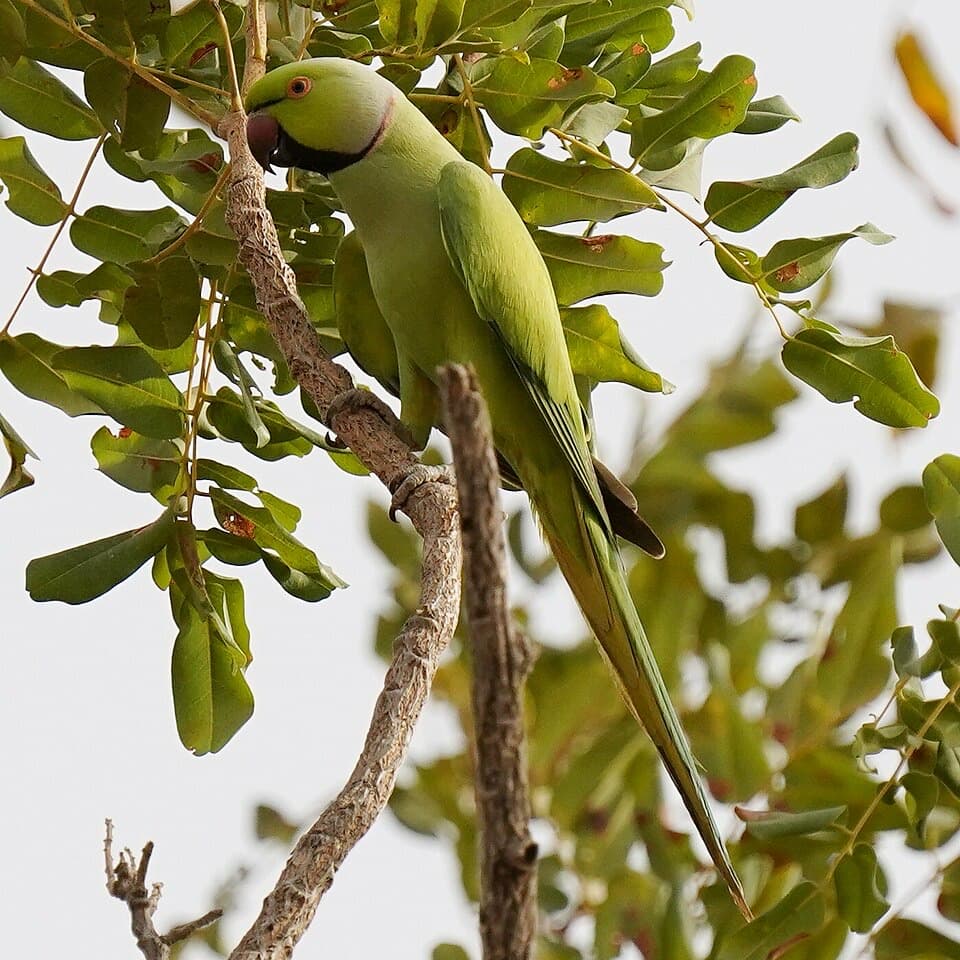
Indian Ringneck Parakeet
Also known as Rose-ringed parakeet, Ring-necked parakeet, Indian ringneck
- Adult size
- about 40 cm long including tail, 110–140 g
- Lifespan
- 20–30 years
- Origin
- South Asia (Indian ringneck subspecies); species also native to sub-Saharan Africa
- Company
- Independent but needs daily training and interaction to stay tame
- Intelligent
- Independent
- Talkative
- Agile
About the Indian Ringneck Parakeet
The rose-ringed parakeet is found naturally across South Asia and a band of Africa south of the Sahara; the Asian birds kept as pets are known as Indian ringnecks. Adult males develop a black chin stripe and a rose-pink neck ring, while females lack the ring or show only a faint shadow.
Breeders have produced blue, lutino, turquoise, grey and many other colours. Escaped birds have also formed large feral colonies in cities outside their native range, which shows how adaptable and strong-flying they are.
Ringnecks are among the clearest talkers of the smaller parrots, but they are not naturally cuddly and can be a challenge in adolescence.
Temperament
Ringnecks are clever, active and somewhat independent, often happier sitting near you than being stroked. Between roughly a few months and a year old, many go through a 'bluffing' phase in which a previously tame bird becomes nippy, wary and reluctant to step up; calm, consistent training usually carries them through it. Their voices are shrill and carry well, and they can call loudly at dawn and dusk. Many learn dozens of words and phrases spoken clearly.
Cage & housing
That long tail means a cage of at least around 90 cm wide, 60 cm deep and 120 cm tall, with bar spacing of about 1.5–2 cm; a frayed or broken tail is often a sign the cage is too cramped. Place perches so the bird can turn round without bending its tail against the bars. Ringnecks are fast, agile fliers and need several hours a day out of the cage in a safe room. Keep them well away from the kitchen, as fumes from heated non-stick cookware can kill a bird within minutes.
Diet
A pellet base with a daily mix of vegetables and greens, some fruit and a little seed suits ringnecks well. They often enjoy chilli peppers, pomegranate and sweetcorn on the cob, which can be used to tempt fussy eaters towards fresh food. Sunflower and other fatty seeds are best kept as training rewards. Never offer avocado, chocolate or caffeine.
Company & enrichment
Ringnecks need to fly every day, and daily mental work in the form of foraging toys, puzzles and trick training. They learn quickly with positive reinforcement, and training is the best tool for getting through the bluffing stage without damaging trust. Many enjoy learning to retrieve objects or ring a bell. Rotate toys weekly, as they bore easily.
Nails, beak & bathing
Most ringnecks prefer a fine shower or misting over a dish bath. Nails may need trimming by an avian vet. Check the long tail feathers for damage, which can point to a cage that is too small or a bird that is panicking at night.
Health
Ringnecks are susceptible to psittacine beak and feather disease, a serious viral infection, so buying from a tested source matters. Psittacosis, respiratory infections and feather plucking from boredom are also seen. Hens can become egg-bound. An avian vet check after purchase and once a year after that is sensible.
Prone to
- Psittacine beak and feather disease
- Psittacosis
- Respiratory infections
- Feather plucking
- Egg binding
- Adolescent bluffing (behavioural)
Call a vet if you notice
- Breathing difficulty or tail bobbingEmergency
- Fluffed and inactiveEmergency
- Abnormal, pinched or lost feathers
- Overgrown or flaking beak
- Change in droppings lasting more than a day
A vet with experience of exotic pets is best placed to help. Find one before you need them.
Common questions
What is bluffing in Indian ringnecks?
Bluffing is a hormonal adolescent phase where a young ringneck becomes nippy and wary, sometimes for several months. Staying calm, avoiding punishment and continuing short positive training sessions usually sees them through it.
Are Indian ringnecks good talkers?
Yes, many speak very clearly and build a large vocabulary, though not every bird talks.
When does a male ringneck get its ring?
Males usually develop their neck ring at around two to three years old. DNA sexing can tell you earlier.
Are Indian ringnecks cuddly?
Generally less so than conures or cockatiels. Many enjoy being near their owners and interacting through training, but not all like being stroked.
Written by the Petopedia editorial team to our editorial standards. General guidance, not veterinary advice.