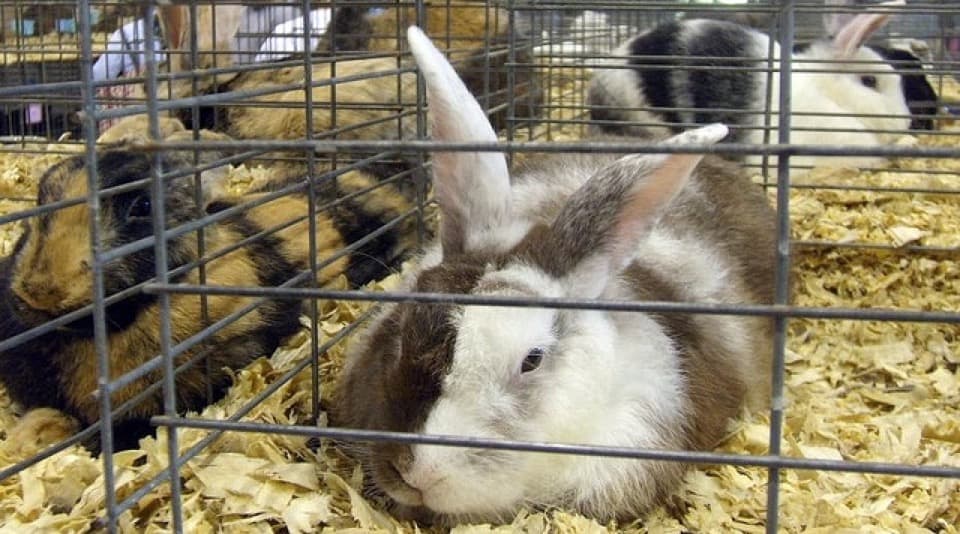
Harlequin
Also known as Japanese rabbit
- Adult size
- About 2.9–4.3 kg
- Lifespan
- 5–8 years
- Origin
- France
- Company
- Keep in a neutered pair or group
- Playful
- Outgoing
- Clever
- Distinctive
About the Harlequin
The Harlequin is a medium-sized rabbit with a striking patchwork coat, typically a split face of two colours and bands or bars along the body and legs. The breed is believed to have developed in France in the late 19th century, and it was once known as the Japanese rabbit.
Each Harlequin's pattern is different, and the markings are hard to breed perfectly for show. As pets they are known for their lively, characterful personalities.
Temperament
Harlequins are often described as playful, outgoing and intelligent, with a good deal of personality. They tend to be inquisitive and enjoy interacting with their owners. Some are quite vocal in body language, thumping or nudging to get attention.
Housing
A Harlequin needs a large area to explore and exercise, ideally with constant access to a run or rabbit-safe room. Include a sheltered place to sleep and several hideouts. Outdoor housing must be secure from predators and protected from rain, wind and summer heat.
Diet
Feed unlimited hay and a varied daily mix of leafy greens and herbs. A modest portion of plain pellets is enough, adjusted for the rabbit's size and activity. Fresh water must always be available, and fruit should be a small, occasional treat.
Exercise & enrichment
Their intelligence makes them good candidates for clicker training, treat puzzles and obstacle courses. They enjoy rearranged layouts, tunnels and cardboard castles. Daily interaction keeps them content, though most prefer play to being carried.
Grooming
Their short coat needs weekly brushing, increasing during moults. Check teeth, nails and the rear end regularly.
Health
Harlequins are not known for many breed-specific health problems. They are, however, prone to the usual rabbit conditions such as dental disease, gut stasis, obesity and uterine cancer in unspayed does. Vaccination against myxomatosis and RHD where available is recommended.
Prone to
- Dental disease
- Gastrointestinal stasis
- Obesity
- Uterine cancer in unspayed does
Call a vet if you notice
- Off food or no droppings for a few hoursEmergency
- Swelling of the eyelids, lips or genitalsEmergency
- Lumps along the jaw
- Runny eyes or nose
- Persistent soft droppings
A vet with experience of exotic pets is best placed to help. Find one before you need them.
Common questions
Why is it called a Harlequin rabbit?
The name refers to the patchwork costume of the Harlequin character in traditional theatre, which the rabbit's split colouring resembles.
Do Harlequin rabbits make good pets?
They are generally friendly and entertaining, which makes them rewarding companions. They need space and stimulation to channel their curiosity.
What colours do Harlequin rabbits come in?
There are two main groups: the Japanese type, combining orange or fawn with a darker colour, and the Magpie type, combining white with a darker colour.
Written by the Petopedia editorial team to our editorial standards. General guidance, not veterinary advice.